Building Trust at Scale – A Lead Generation Playbook for ClaimTrackr
- SaaS
- Software
- Leads
- Ads
- Meta
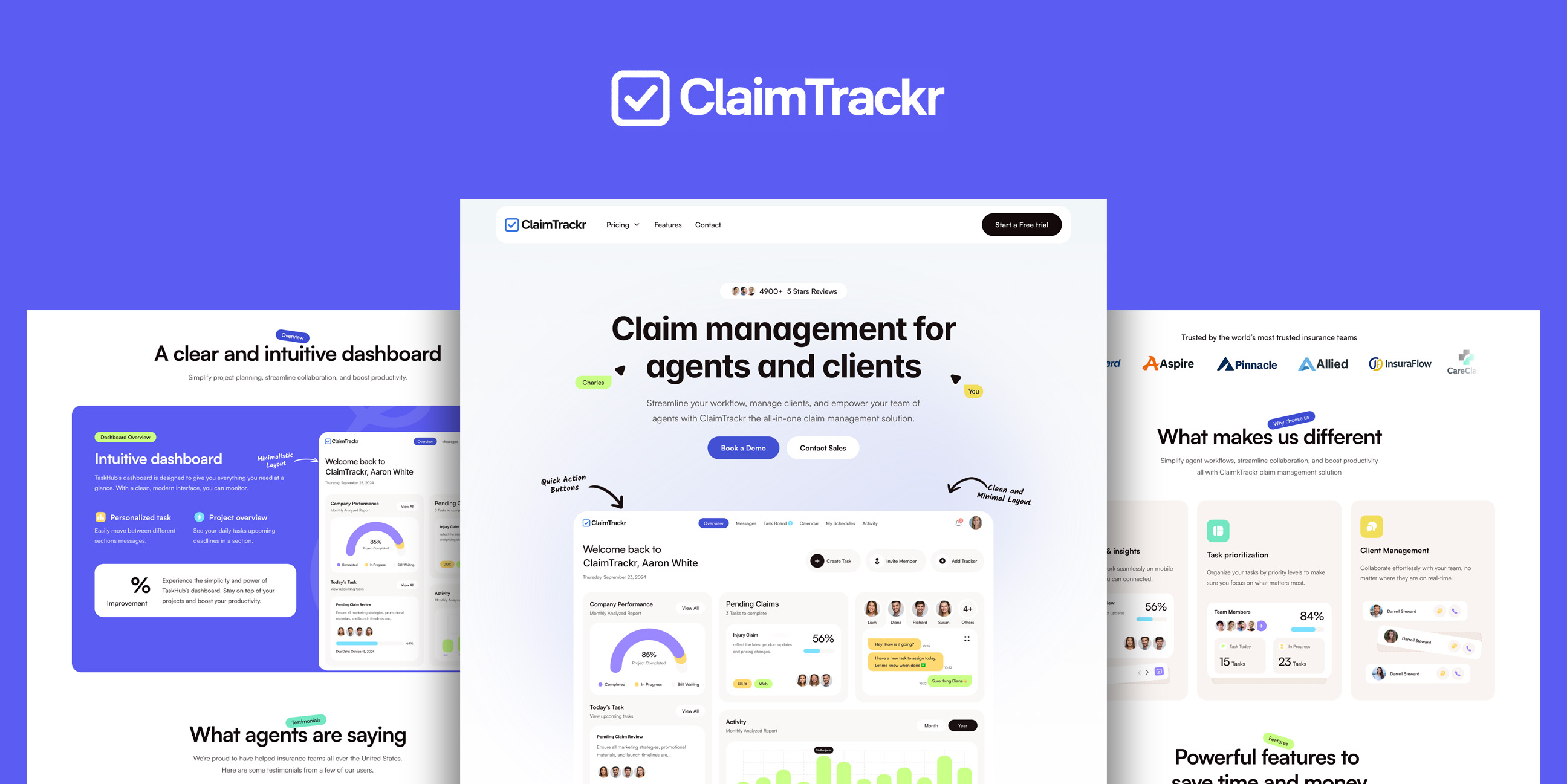
ClaimTrackr is a digital platform built to simplify the insurance claims process—an area often marked by stress, confusion, and slow communication. With a powerful SaaS product ready for market, ClaimTrackr needed more than awareness; it needed a reliable system to generate warm, qualified leads who were ready to take the next step.
Our approach prioritized clarity, credibility, and conversion-first messaging. Instead of pushing features, we designed a funnel that positioned ClaimTrackr as a trusted guide in the claims journey—offering useful content, pain-point-driven copy, and low-friction lead magnets to build pipeline volume. The focus was on building trust before the demo, not just pushing people to it.
What follows is a breakdown of how narrative-driven creative, funnel segmentation, and intent-based lead capture helped ClaimTrackr move beyond clicks and build a high-converting lead engine. This is a framework for turning ad spend into real opportunities—especially for products that require education, trust, and timing.
Before partnering with me, ClaimTrackr relied on generic campaigns with minimal targeting—generating cold traffic, few qualified leads, and little insight into what was actually working.


Here’s how ClaimTrackr’s campaign was performing in-house—low engagement, high lead costs, and no clear path to conversion.
$38.73 per lead
0.86%
$3.42
167
With no clear offer, limited funnel structure, and generic ad creative, ClaimTrackr’s campaigns failed to resonate with qualified prospects. To reverse course, we needed to clarify the value prop, restructure the funnel to guide intent, and create messaging that addressed the real pain points of our target audience. Precise segmentation, creative variation, and a refined lead capture flow would be key to improving performance and unlocking scalable acquisition.
With ClaimTrackr, the creative strategy was built around clarity and trust. Instead of flashy visuals, we leaned into clean, professional designs that mirrored the tone of modern SaaS brands. Early concepts focused on simple headlines, subtle motion, and real-world pain points—designed to stop the scroll without relying on gimmicks. Once initial signals came in, we layered in variant testing across messaging, layout, and tone to refine what resonated. The goal wasn’t just to grab attention—but to build credibility from the first impression.


In the first month, we cut lead costs by optimizing the offer, tightening targeting, and launching fresh creative. Early wins gave us traction and a clearer path forward.


With $5,559 in spend, we generated 251 leads at a $22.15 cost per result—down from $38.74 in the in-house campaign. CTR climbed to 1.37%, and CPC dropped by over 50%, indicating stronger alignment between ad creative and audience intent.
This early phase showed how positioning and structure can dramatically improve results. By segmenting audiences based on claim type and building each ad set around specific pain points, we created a more relevant and compelling journey. Legacy copy was reworked into a clearer narrative, and visual consistency helped build trust from the first touchpoint. With a healthy lead cost and early signals of quality, we now had a solid foundation to scale, test, and convert with confidence.
By month three, performance scaled through refined messaging, higher intent targeting, and elevated creative—bringing in more qualified leads at a lower cost.

With a larger budget and tighter campaign structure, the system started to compound. Our lead cost dropped again, and engagement climbed—driven by smarter segmentation, clearer messaging, and stronger creative. This phase proved that ClaimTrackr’s offer resonated when framed around real user pain points.
Creative testing was key. New concepts focused on clarity, social proof, and credibility—particularly around the frustrations of traditional claims handling. Our highest-performing variations leaned into real-life scenarios and simple solutions. Narrow lookalike audiences and high-intent segments began outperforming broader cold traffic. Retargeting ads layered with testimonials and trust elements helped move leads further down the funnel. Month three validated the system’s scalability and gave us a repeatable model to build on.
By month six, the campaign reached nearly 330,000 people and delivered over 300 purchases at our lowest cost per acquisition yet—cutting CPA by 35% and hitting a 3.36x ROAS.

With over $10,000 in spend, we generated 656 leads at just $16.26 each—our lowest cost yet. Click-through rate held strong at 1.75%, CPC dipped below $1, and overall efficiency improved across every metric. At this point, the system was not only performing—it was predictable. Messaging, audience segments, and creative variants were dialed in and delivering consistent returns.
The biggest insight from month six was how small, steady refinements drive long-term scale. Rather than chasing trends, we focused on iterating our best-performing concepts—updating visuals, rotating testimonials, and expanding high-performing audience groups. Retargeting was now pulling from a much larger pool of engaged users, and our funnel was optimized to guide interest into action. With a proven lead gen machine in place, ClaimTrackr was well-positioned to shift focus toward backend conversion and lifecycle optimization.
With a stable lead generation system in place, the next phase is scaling efficiently while improving lifetime value. As ClaimTrackr continues to nurture and convert leads, we’ll explore broader audiences, expand retargeting flows, and diversify creative to match new funnel stages. With a sub-$17 CPL and a strong sales pipeline, the focus shifts to increasing conversion rates, refining onboarding, and unlocking downstream revenue. Paid social is now positioned as a reliable acquisition engine—ready to scale in sync with product and sales growth.